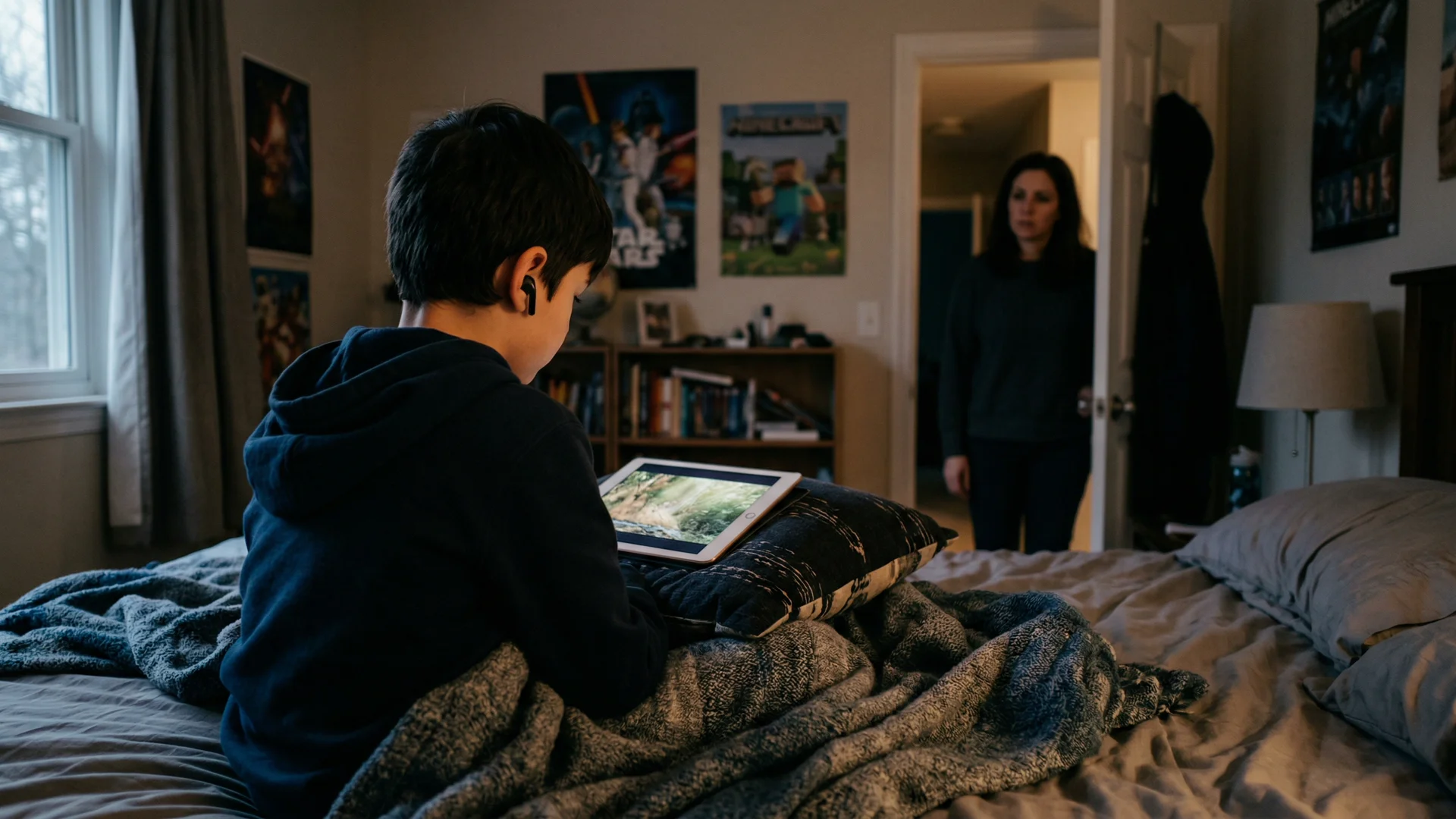
Your child finishes a gaming session. They pull off the headset. And something is different.
Maybe they're quiet. Maybe they're snappy. Maybe they just seem off in a way you can't name. They say "nothing happened" or "I'm fine" and disappear to their room.
It might be nothing. Children have bad matches. They fight with friends. They lose a game they cared about. All of that is normal.
But sometimes that "off" feeling is the first signal that something happened in a voice conversation you couldn't hear.
This guide helps you tell the difference between normal gaming frustration and something worth paying attention to.
Normal vs concerning: a framework
The hardest part of this is that grooming, bullying, and toxic voice interactions can look exactly like normal tween/teen moodiness from the outside. Here's how to tell them apart.
Normal after-gaming moods (the "gaming hangover")
There's a biological reason your child is grumpy after gaming. Competitive games like Fortnite and Roblox flood the brain with dopamine and adrenaline. When the session ends, there's a sudden drop in stimulation. The result is irritability, restlessness, or withdrawal that has nothing to do with what anyone said in voice chat. It's their brain resetting.
These are developmentally typical and usually pass within 30 minutes:
- Frustrated after losing a competitive match
- Annoyed because a friend did something in-game that upset them (resolves by next session)
- Overstimulated and needing quiet time after a long session
- Briefly withdrawn because they were deeply focused and need to transition back
- Snappy because you interrupted them mid-game (annoying but normal)
The pattern: these moods are short-lived, connected to a clear cause, and your child can usually articulate what happened ("I lost" or "Jake was being annoying").
Concerning after-gaming moods
These are worth paying closer attention to:
- Emotional reactions that seem disproportionate to "just a game" (tears, intense anger, shutting down)
- Consistent pattern of mood changes after gaming sessions (not just once, but regularly)
- Withdrawal that lasts hours or affects the rest of the day
- Reluctance to talk about what happened (not "I lost," but "nothing" or "leave me alone")
- Anxiety about the next gaming session (wanting to play at specific times, getting upset if they can't)
- Changes in sleep, appetite, or mood that correlate with gaming patterns
The pattern: these are sustained, hard to explain, and your child either can't or won't tell you what's going on.
Three hidden reasons for post-game mood crashes
When a child is consistently "off" after gaming and can't articulate why, it could be:
Bullying or toxic behavior in voice chat
Voice chat in gaming lobbies is aggressive, especially for boys. Trash talk, slurs, personal attacks, and "you're trash" pile-ons are constant in competitive games. The pressure to perform, to not seem weak, and to fire back is intense. Most young gamers report experiencing harassment in online multiplayer games (ADL, "Hate Is No Game," 2023).
Your child may not tell you because:
- They think it's just "how gaming is" (normalized toxicity)
- They're embarrassed about being targeted
- Admitting it bothers them feels like weakness (especially for boys)
- They're afraid you'll take away the game
Grooming in early stages
In the early stages, grooming doesn't look like abuse. It looks like a special friendship. Your child might be moody because the relationship is creating emotional dependency, confusion, or pressure to keep secrets. It can also move fast: the WeProtect Global Alliance's 2023 Global Threat Assessment found conversations with children on gaming platforms can escalate into high-risk grooming in as little as 19 seconds, with an average of about 45 minutes. If you want a fuller checklist, see our guide to grooming warning signs in gaming.
Signs that mood changes might be connected to a concerning relationship:
- The mood shift happens after sessions with one specific person
- Your child mentions someone who "really gets them" or seems unusually attached to an online friend
- They become secretive specifically about who they're playing with
An incident they don't know how to process
Sometimes a child hears or experiences something in a voice lobby that scared or confused them. Sexual language. An adult saying something inappropriate. A threat. They might not have the words to explain it, or they might not be sure if it was "bad enough" to mention.
What to do (without overreacting)
Step 1: Notice the pattern
One bad mood after gaming is nothing. A pattern of mood changes is information. Pay attention over a week or two before drawing conclusions.
Keep a mental note (or a discreet note on your phone):
- Date
- How long the session was
- Mood when they came off
- Anything they said or didn't say
Step 2: Start with a soft check-in
Not this: "What happened? Who were you talking to? What did they say?"
This: "You seem a bit quiet. Everything okay?"
If they say "I'm fine," don't push. Try again another time. The goal is to leave the door open, not to force it.
Other approaches:
- "Tough session?" (assumes gaming cause, non-threatening)
- "Anything happen this week in your games that was weird or annoying?"
- "I noticed you've been a bit flat after gaming recently. Not in trouble. Just checking in."
Step 3: Game together occasionally
If your child lets you, play a round with them. Or sit in the room while they play (not hovering, just present). You'll learn more about their gaming environment in 20 minutes of observation than in a dozen questions.
Step 4: Check the basics
If the pattern continues:
- Review the friends list. Any unfamiliar names?
- Check for new apps. Discord, Snapchat, or messaging apps that weren't there before?
- Look at Screen Time data. Is gaming happening at unusual hours (late night)?
- Ask about their gaming friends casually. "Who's that person you play with a lot? Do they go to your school?"
Because voice chat leaves no record, some parents also use a tool like Halo, which sends you an alert when it detects grooming, bullying, or threats in the game. Their voice never leaves their device. Only the words are analysed, then discarded. Never stored. You get a summary, not a recording. If you want the wider picture, we cover the trade-offs in gaming safety without surveillance.
Step 5: If you suspect something specific
If the mood changes are persistent and you notice other warning signs (secrecy, new apps, unexplained gifts, defensive behavior around devices):
- Don't confront. Stay calm.
- Document what you've noticed (dates, behaviors, any details).
- Have a direct but gentle conversation: "I've noticed you seem different after gaming. I'm not angry. I want to help."
- If your child discloses something: "Thank you for telling me. That took courage. It's not your fault."
- If you suspect grooming or exploitation: report to CyberTipline.org (NCMEC) and your local police.
The conversation to have before it's needed
The best time to have this conversation is when everything is fine.
Ages 8-10: "Sometimes things happen in games that can make you feel weird or upset. If that ever happens, you can always tell me. You won't be in trouble, and we'll figure it out together."
Ages 11-13: "Gaming is supposed to be fun. If it's making you feel bad regularly, that's worth talking about. It might be something in the game, or it might be someone in the game."
Ages 14+: "I'm not going to pretend I understand everything that happens in your gaming world. But if something ever happens that makes you feel unsafe, trapped, or just confused, I'd rather hear about it."
When professional help makes sense
Consider speaking to a counsellor or psychologist if:
- Your child's mood after gaming is affecting their daily life (school, sleep, relationships)
- They show signs of anxiety, depression, or withdrawal that persist beyond gaming
- You suspect they've been exposed to sexual content, sextortion, or manipulation
- They've disclosed something and need support processing it
This isn't an overreaction. Children who experience online harassment, grooming, or toxic voice environments can develop real psychological impacts, and early support makes a significant difference.
Frequently asked questions
Is it normal for kids to be moody after gaming?
Yes. Occasional frustration, overstimulation, and short-lived bad moods are developmentally normal, especially after competitive games. It becomes concerning when mood changes are consistent, disproportionate, or your child can't or won't explain what's happening.
How do I know if my child is being bullied in voice chat?
Signs include: consistent mood changes after gaming, reluctance to play games they used to enjoy, comments like "everyone hates me" or "I don't want to play anymore," and sometimes mimicking aggressive language they've been exposed to. Voice chat bullying leaves no evidence, so your child's behavior is the main signal.
Should I limit gaming if my child seems affected?
Not as a first step. Limiting gaming can feel punitive and shut down communication. Start with conversations and settings changes (voice chat to Friends only). If the issue persists after settings are locked down and you've talked about it, then consider reducing session length or taking a break together.
My child won't talk to me about it. What now?
Don't push. Leave the door open ("I'm here whenever you want to talk"). Try indirect approaches: talk while doing something else (driving, cooking), ask about gaming in general rather than specific incidents, or share your own experiences with conflict ("I had a tough day at work today" can model vulnerability). If they're consistently distressed, a school counsellor or therapist may help.
Sources
- [WeProtect Global Alliance] "Global Threat Assessment 2023." weprotect.org.
- [ADL] "Hate Is No Game." 2023.